A Postcard from Russia (and Estonia)

God has blessed us in many, many ways. Valerie has been with us just over a month and is doing great. She’s happy and healthy, talking more and is quite smart. Olga is doing great as a new mom, though there are challenges. And I am so thankful to have a daughter who runs to me when I come home. These are sweet days.

I’ve just returned to Russia from a trip to Estonia and will go back again in a few days. I’m on the road quite a bit just now.

In Estonia, we’ve made great progress on our plans to build a center for disabled children. Later this month the city council will vote on giving us a piece of land; the mayor has already pledged it to us, so we’re quite sure we’ll get the lot. This week we plan to register an Estonian charity that will own the land and run the center. I’ll be a founding board member. The architect continues to work on the design. An English charity just donated $3000 to help with start-up expenses.

It is all very good. And we are VERY thankful.

Young Pioneers

Some of our work takes place in ex-soviet pioneer youth camps. Our camp Elama is on the grounds of an old pioneer camp. Here is an article about the Young Pioneers, the soviet youth organization:

Young Pioneer organization of the Soviet Union

From Wikipedia, the free encyclopedia

Emblem of the Young Pioneer organization of the Soviet Union

The Young Pioneer Organization of the Soviet Union, also Lenin All-Union Pioneer Organization was a mass youth organization of the USSR for children of age 10–15 in the Soviet Union between 1922 and 1991.

History

After the October Revolution of 1917, some Scouts took the Bolsheviks’ side, which would later lead to the establishment of ideologically altered Scoutlike organizations, such as ЮК (Юные Коммунисты, or young communists; pronounced as yook) and others.

50 years, Stamp, 1972

During the Russian Civil War from 1917 to 1921, most of the Scoutmasters and many Scouts fought in the ranks of the White Army and interventionists against the Red Army.

Those Scouts who did not wish to accept the new Soviet system either left Russia for good (like Oleg Pantyukhov and others) or went underground.

However, clandestine Scouting did not last long. Komsomol persistently fought with the remnants of the Scout movement. Between 1918 and 1920, the second, third, and fourth All-Russian Congresses of the Russian Union of the Communist Youth (Российский коммунистический союз молодёжи, or Rossiyski kommunisticheskiy soyuz molodyozhi) decided to eradicate the Scout movement and create an organization of the communist type, that would take Soviet youth under its umbrella.

On behalf of the soviet government Nadezhda Krupskaya (Vladimir Lenin‘s wife) was one of the main contributors to the cause of the Pioneer movement. In 1922, she wrote an essay called Russian Union of the Communist Youth and boy-Scoutism. However, it was the remaining scoutmasters themselves, like Innokentiy Zhukov and some others around Nikolaj Fatyanov’s “Brothers of the fire”, who introduced the name “pioneer” and convinced the Komsomol to keep the scout’s motto “Be prepared! – Always prepared!”

Just some days before the Komsomol conference the Moscow scoutmasters adopted a “Declaration of the scoutmasters of Moscow concerning the question of the formation of a children’s movement in the RSFSR” on May 13, 1922. Thereby they suggested to use the system scouting as a foundation of the new communist organisation, and to name it “Young pioneers”. Continue reading

3 Videos

Here are three recent short videos.

First, today we went to Tavrichesky Park, the park across the street from our flat. Valerie loves to go down the slide and sled down hills. She’s pretty tough and fearless. This video was made at noon; notice how low the sun is in the sky.


Here Olga and Valerie walk through the park.

A few days ago we went shopping. Valerie enjoyed running back to mama.

Breakthrough!

The lights were off in our foyer when I returned home from work. As I as setting my things down, Valerie stood at the other end of the hall looking to see who was in the darkness. I could see that she was looking at me but didn’t know it was me.

I said ‘privet’ (hi), and she ran down the hall and gave me a big hug! This is first time she’s done that. Later in the day I started rough-housing with her (picking her up by her legs, tickling her, etc), and though she didn’t know what to make of it at first she started really enjoying it.

And then this:

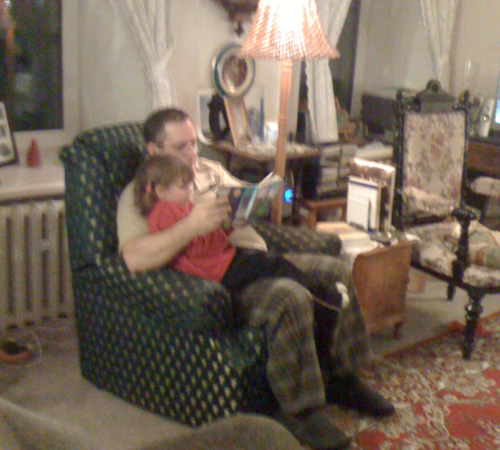
Olga picked up her phone and took this picture after Valerie brought a book (in English) for me to read to her.  This has been a dream of mine — for Valerie to sit on my lap while I read to her.

I am very thankful.

Koivisto Church

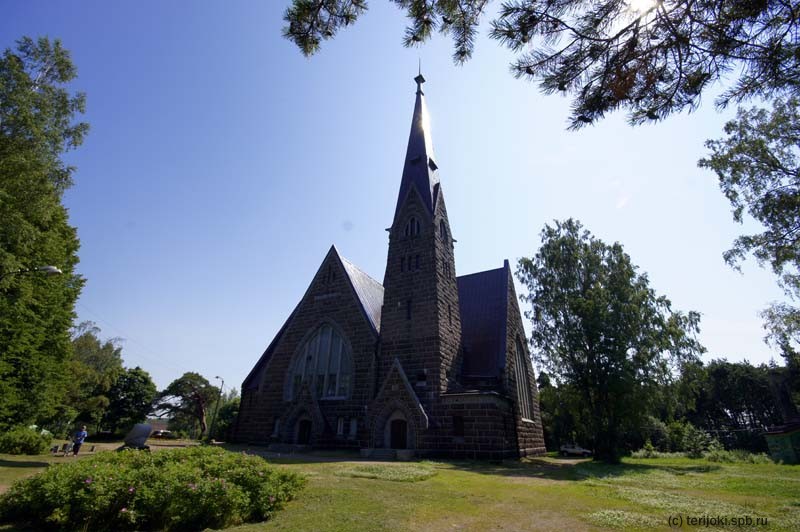
Here is more information about the old Finnish church in Primorsk (in Finnish Koivisto) I visited a few days ago. I got it from a very interesting site that has info about many Finnish Karelian churches. Thanks to Andrey for giving me the link! (anyone, feel free to correct me if I’ve missed anything)

The church, the sixth in that area, was built in 1904. During the Soviet era it was used as a cinema and a disco, now there is a small museum in the church.

The first pastor of the parish is mentioned in 1575. There was most likely another church in that immediate area going back perhaps even to the 14th century.

The third church, with a bell tower, was located on an island in the gulf, near the current mainland location. In 1706 it was burned during a raid by bandits and the church bells fell into the sea. Later the bells were found and installed in the new church, built on the mainland that same year in the location of the current church building. This fourth church, made of wood, served from 1706 to 1763.
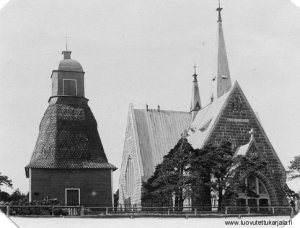
The fifth church building, in the shape of a cross, was consecrated in 1763. In 1775, a bell tower (at left, but with the current building) was built near the church.  This bell tower was destroyed in WWII.

The sixth, and present, church was consecrated in December 1904. It was designed by Joseph Stenbeck (1854? – 1929).

It’s a granite church with a cross-shaped length of 110 feet (of 37 meters) and a width of 85 feet (28 meters).

It held 1,800 seats. Inside was a large mural “The Last Supper” painted by the architect’s wife Anna Stenbeck.

The church organ (right) sounded for the first time on Christmas Eve 1906.

In 1940, after the conquest by Soviet troops the organ disappeared and its fate is not known.

Here is a good time to explain briefly the wars between Finland and Russia. The first war, called the Winter War, was fought for four months during the winter of 1939-40. Russia invaded Karelia and took most of the peninsula, including Koivisto. Surprisingly (to the Russians and many others), Finland kept Russia from completely over-running the entire country. The Continuation War began in the summer of 1941, as the Germans invaded Russia from the south; Finland retook its old ground early in the war but then lost it again in 1944.

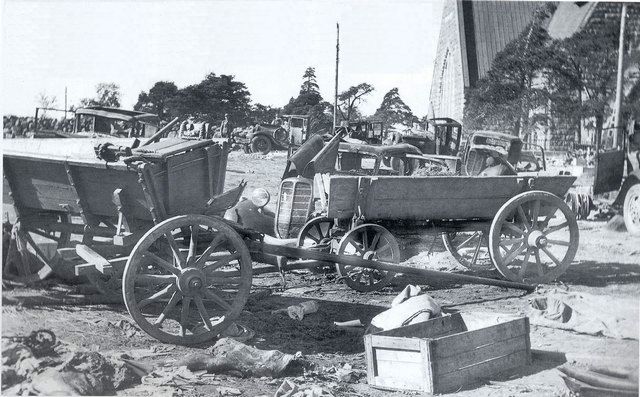
Here is a picture of the church grounds, after Finnish troops re-took the town in 1941.

And here is the sanctuary after the Soviets took the church in 1944. Notice the new ‘gods’:
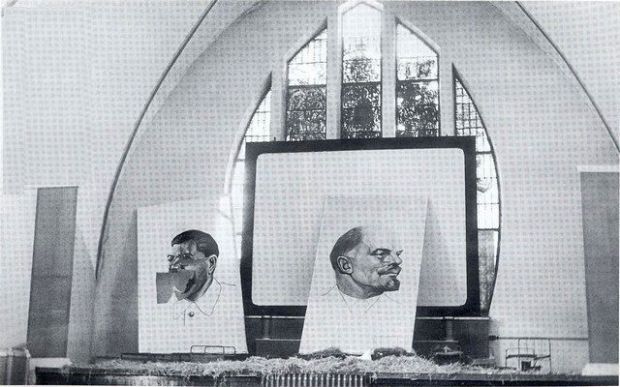
The scale of this picture is difficult to comprehend. The window is fully 40 feet tall (13 meters), so the picture of Lenin is quite large. Here is an earlier image for scale (notice how the Soviets blacked out the image of Jesus in the picture above):

Snapshots from Russia

This is a pretty standard view of our city streets these days —

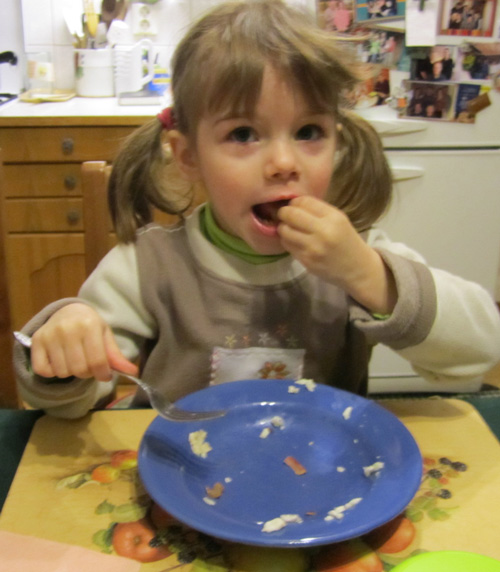
One of my joys in being part of an international family is introducing Olga (and now Valerie) to my home culture; today (sleepy) Valerie had her first bacon and egg breakfast. This is probably the first time she’s eaten bacon, and she really took to it.

Sergei Tovstpyat and I went to Charlie Chastain’s garage to start his van and put on winter tires (the Chastains return from the US next week and need to have their van at the ready).

It’s common here to rent a garage in an area where there are many garages. This is what it looked like today.

Each little building is a one-car garage. The garage owners rent their plot from a company that owns the land. As you can see, some people have a pile of snow up to the roof because their neighbors shoveled the snow from in front of their garage. Like so many things here, it’s not convenient. It took us a long time just to drive to the garage and then clear the snow from in front of the door.

So, for those of you in the US who wonder why it it can take so long to get things done here in Russia, this is one example of how a simple project can eat up more than half a day.

Russian Christmas

Here’s a good explanation about Russian Christmas and why it is celebrated on January 7 –

Russian Christmas

Thirteen days after Western Christmas, on January 7th, the Russian Orthodox Church celebrates its Christmas, in accordance with the old Julian calendar.  It’s a day of both solemn ritual and joyous celebration

After the 1917 Revolution, Christmas was banned throughout Russia, along with other religious celebrations.  It wasn’t until 75 years later, in 1992, that the holiday was openly observed.  Today, it’s once again celebrated in grand fashion, with the faithful participating in an all-night Mass in incense-filled Cathedrals amidst the company of the painted icons of Saints.

Christmas is one of the most joyous traditions for the celebration of Eve comes from the Russian tradition.  On the Eve of Christmas, it is traditional for all family members to gather to share a special meal.  The various foods and customs surrounding this meal differed in Holy Russia from village to village and from family to family, but certain aspects remained the same. Continue reading