Dacha!

Pastor Andrei Furmanov wrote this great article about Russian Dachas —

In the days when the USSR was still a country collective farms, which were the backbone of Russian agriculture, were unable to produce enough, and the money for importing food was sufficient to only buy grain. The result was an official policy was that citizens of then USSR were supposed to grow a lot themselves.

Dachas were formed as cooperatives supervised by trade unions and the by-laws of these cooperatives were strict enough. First of all, the land technically of course did not belong to the members of those cooperatives, all land was state federal property at those times. It was leased to trade unions and could not be sold. Another serious restriction was that the usage of this land had to be limited to growing things.

One simply could not make a lawn on his or her land and enjoy the grass. That would be illegal and immediately would result in kicking the person out from the dacha cooperative and replacing him with a more devoted “weekend farmer”. Not more than one dacha per family was allowed.

The typical size of land given by the state to a family varied from 4 to 12 “sotok”, 6 and 8 being the most common (not surprising, now a popular newspaper for dacha owners is titled “6 Sotok” and everyone perfectly understands what they mean by that). One “sotka” = 100 square meters, so typical dacha land area of 6 sotok is equal to 0.16 acres.

Statistic says that now more than 30% of Russian families have dachas. And traditionally most of the dachas were distributed by the trade union organizations at the major industrial enterprises. Therefore in many cities the figures are even higher. Majority of dacha owners were workers, according to the party policy.

We are not saying that other social groups were not allowed to have dachas. It’s just important to realize that having a dacha was not a sign of belonging to elite class, and almost every family could easily get it if at least one family member had been working for 5 or 10 years at the same factory or plant.

But we have given you enough dry facts… Let us add some emotions to that long technical introduction to the concept of dacha – one of the key concepts of Russian life in both Soviet and post-Soviet times. Continue reading

Into the North

murmansk 043 In the North
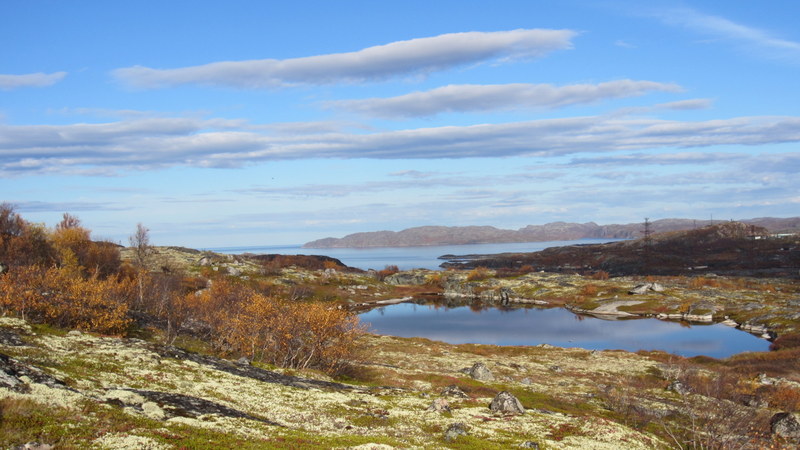
North of the Arctic Circle, near Murmansk

I’ve just returned from visiting Stoneworks missionary Yura Belonozhkin and see the work he’s doing up north. I met some wonderful people and saw an amazing part of the world.

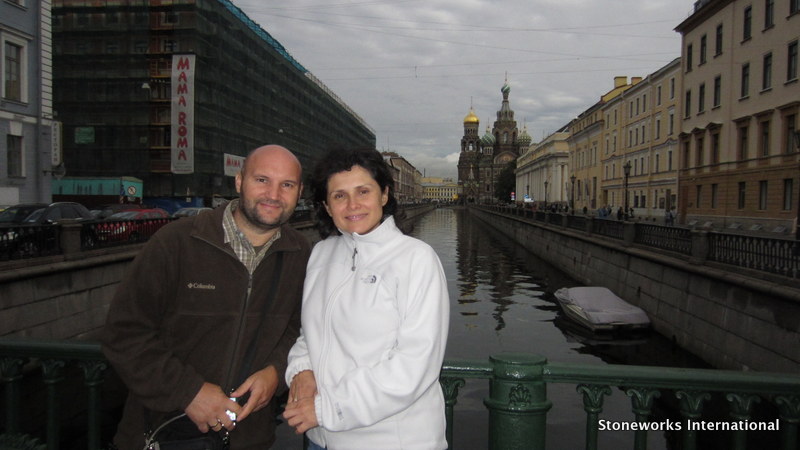
vladimir marijana 003 300x168 In the NorthVladimir and Mariana Cizmanski were visiting from Montenegro. I met them in Estonia and introduced them to our friends and ministry partners there. It is always gratifying when our Stoneworks partners to meet one another. My wife Olga and I had a good time showing them St. Pete.

While Marijana stayed in St. Petersburg with Olga, Vladimir and I headed north. The first day, we drove 1300 km (800 miles) to Zelenoborskiy, where Yura met us at a Christian drug rehab center.

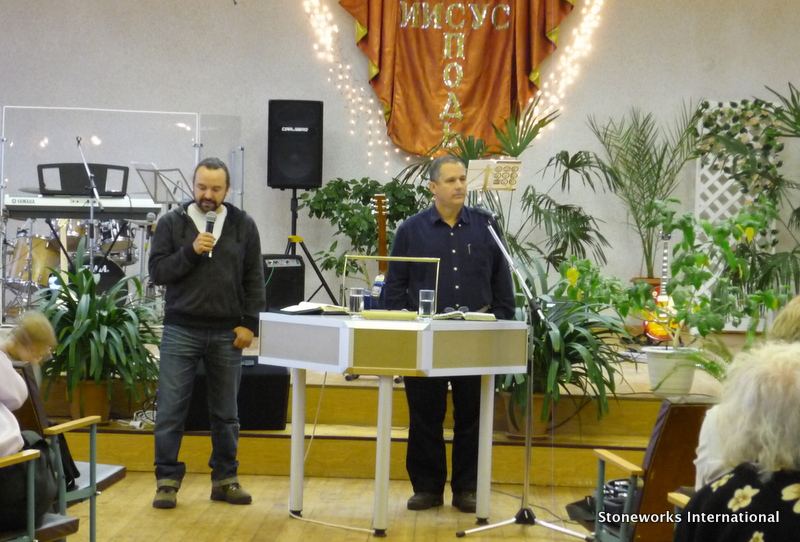
zelenoborsky rehab 300x211 In the NorthYura and I spoke at a men’s meeting at the rehab center. It’s a great group of people, and several local churches support the center. Yura has led men’s meetings there and has very good relationships with the leadership. Over the next few days, as we visited other churches, we continued to meet men and women who are either in the rehab center or lived there before.

On the second day, we drove north to Olenegorsk to attend a prayer conference. Several local churches participated. I was asked to speak at the afternoon session, and I did a teaching on intercessory prayer. Peter Makarchuk is the bishop of several churches in that area, and he made us feel very welcome. He and Yura have a good relationship.

olenogorsk 007 In the North
Speaking at a prayer conference in Olenegorsk, Russia.

We spent that night with Yura’s friends from that church; there we saw some Russian ingenuity. The next morning, Sunday, Vladimir was asked to preach the sermon, and he gave a sermon on self-denial that was warmly received. We then drove north to Murmansk. Continue reading

Montenegro Comes to Russia

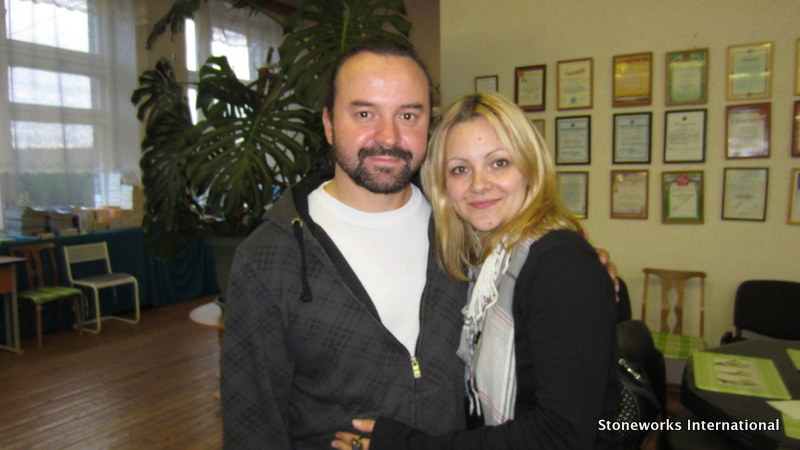
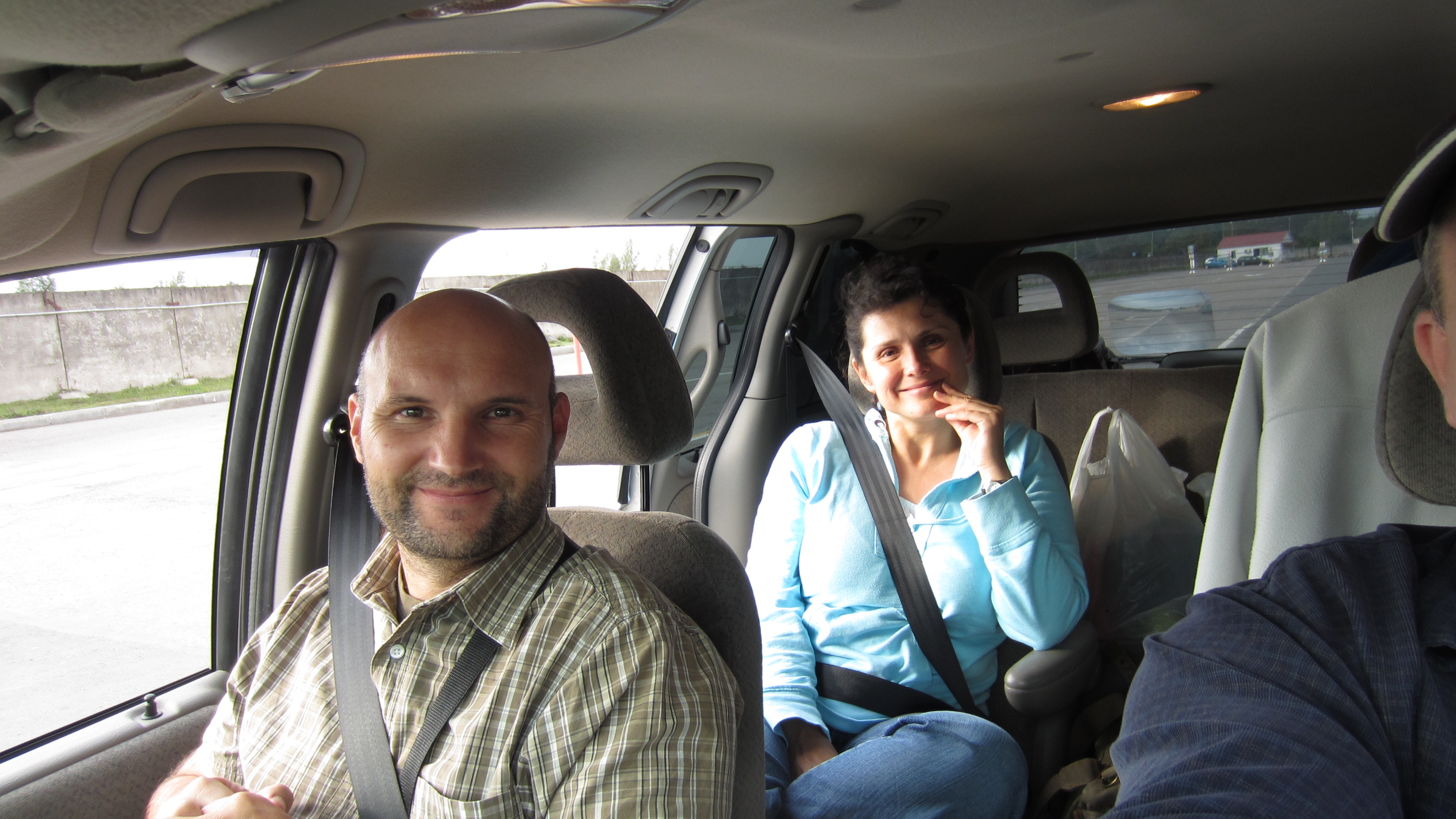
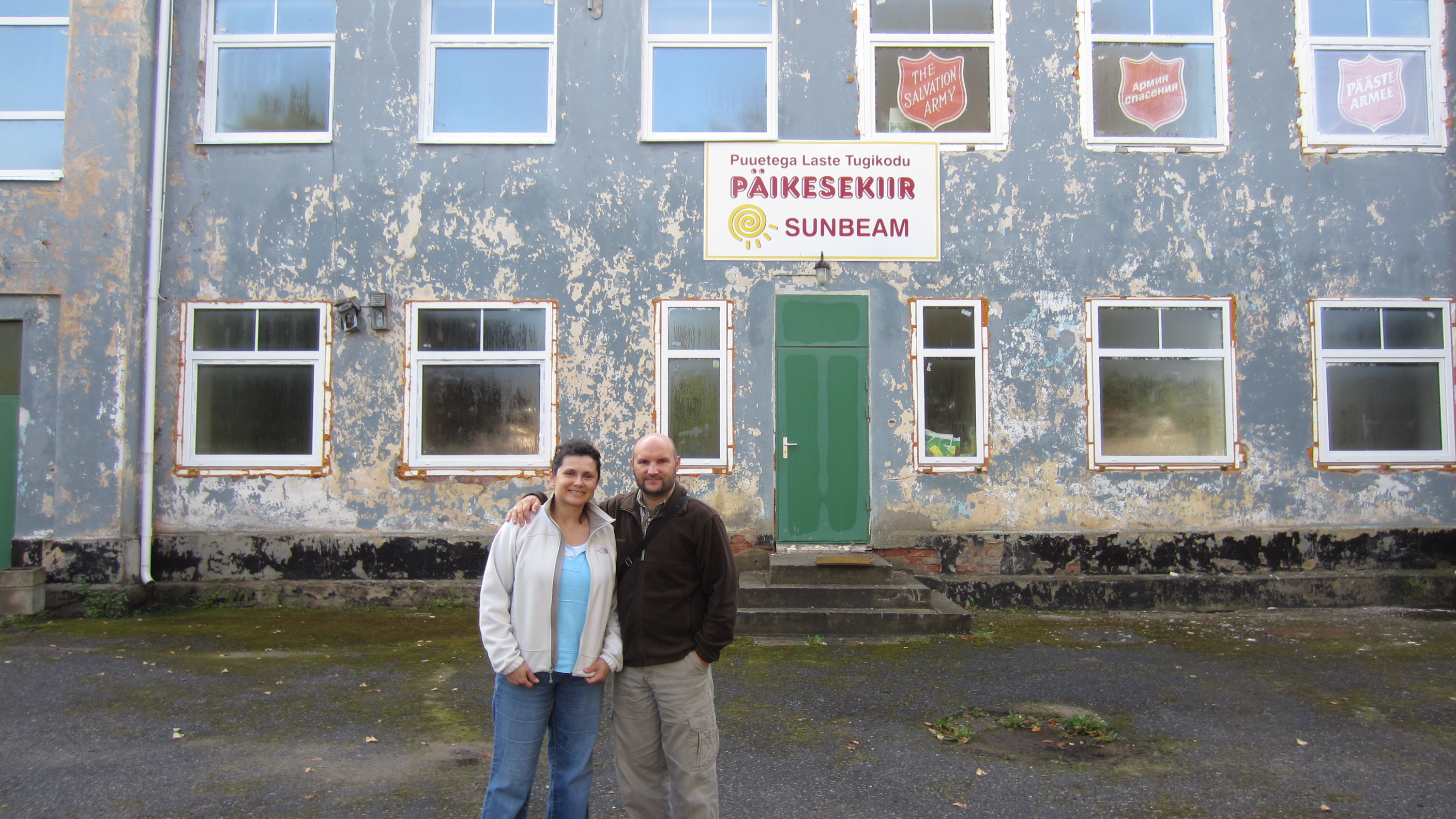
Vladimir and Marijana Cizmanski are visiting us from Montenegro. They arrived a few days ago; it’s a dream come true for them to visit us and see our life in Russia. Here’s proof that our good friends from the South have made the long journey —

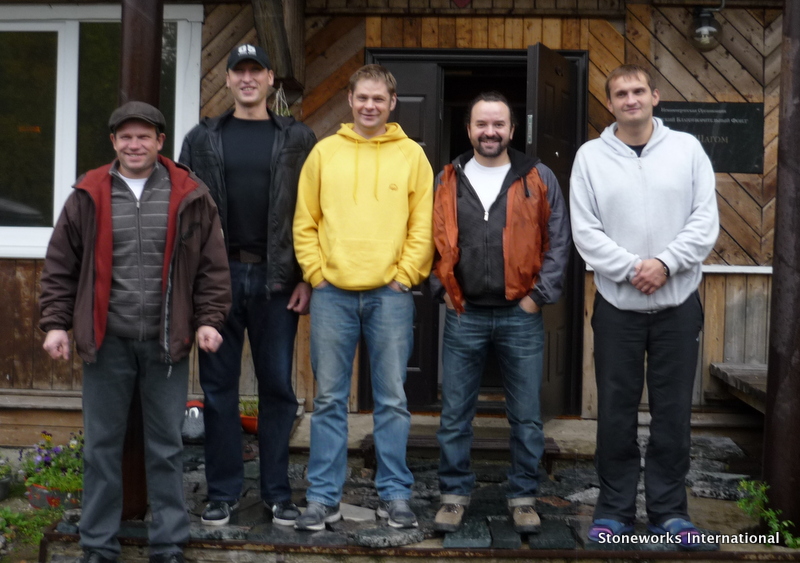
Vladimir and I are now visiting Yura Belonozhkin in the Murmansk area. I spoke at a men’s meeting at a rehab center in Zelnoborsky, a prayer conference in Olenogorsk, and today Vladimir will speak at a church this morning and I’ll speak at a church in Murmansk tonight. Tomorrow we start towards Vadso, Norway to visit ministry partners there; on the way we’ll attend a men’s meeting in Russia.

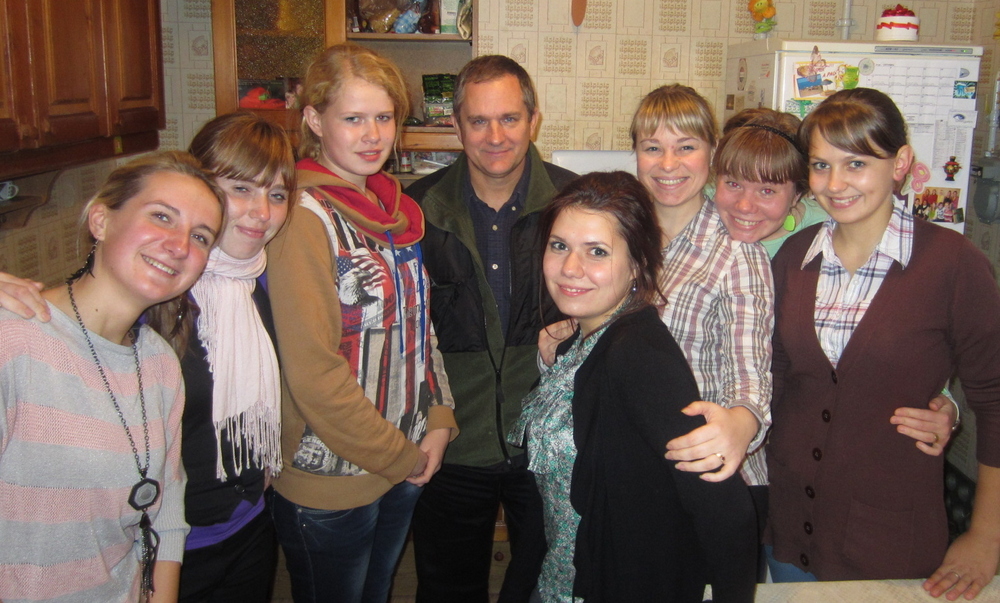
Here is Yura and his wife Masha. They are great people, and we’re very happy to support them in their ministry.


Classic

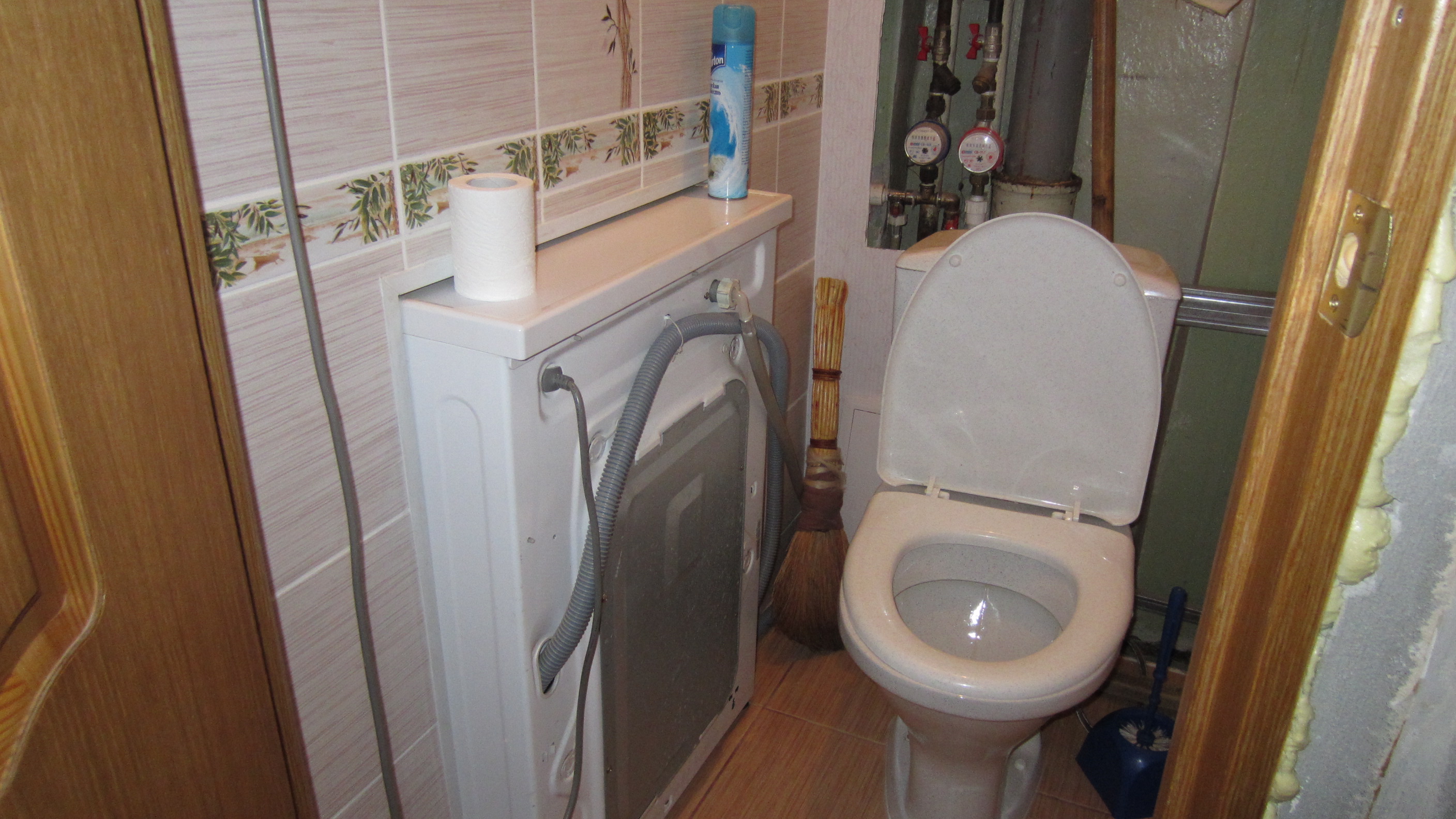
I was at the train station in Luga and need to use the restroom. I closed the door behind me so I could have some privacy, and this is what I saw:

Yes, the window was open to a sidewalk. So much for privacy! I laughed out loud. But really, what are they thinking?!

To the North!

As part of my role as Executive Director of Stoneworks International, I am planning to visit Yura Belonozhkin next month and see the work he’s doing in the far north, particularly his men’s ministry. Vladimir and Marijana Cizmanski will visit us from Montenegro in September, and Vladimir will join me on this trip. It gives me joy for my friends and co-workers in various countries to meet one another.

The route will take us from St. Petersburg to as far north as Vadso, Norway. Vadso is about 420 km (260 miles) north of the Arctic Circle. It will be great to visit our ministry partners and see Karelia, part of the Kola Peninsula and Lapland at that time of year.

I hope to speak at a conference in Olenogorsk, attend church in Murmansk and visit several ministry sites all along the way, with Vadso being our last ministry stop before heading south. We’ll stay in Rovaniemi, Finland, which is on the Arctic Circle (Santa Claus has a house there!). We’ll all spend a couple of days in Finland before going to Estonia to pick up Vladimir and Marijana’s car so they can head home. This should be fulfilling and fun in many ways.

Here is a map for reference (it’s not completely accurate but gives an idea of the route):

A Postcard from Russia

This has been quite a summer, one of the busiest and hardest we’ve ever had. It has certainly been the most diverse.

Olga’s grandfather, Orest Groten (above), passed away in July. He is much missed. Born in 1918, he was a child of the Russian Revolution. He joined Communist Party in 1942 and lived his professional life serving the military, first in WWII as a radioman and later as an engineer designing ships and submarines. For almost all of his days he was a committed atheist. At the age of 93 he asked Jesus to forgive him of his sins. He was a loving father and grandfather, a real anchor for the family. He could combine being strict with being very loving. He taught himself to play the piano and accordion; he enjoyed life, had a wonderful sense of humor, and heartily welcomed an American son-in-law into the family. We are sad that he is not with us now, but we are glad that we will see him in heaven.

In June we helped a mission team from Teen Mania as they ministered in Russia and Estonia. In July, Mike drove through Central Europe and helped a team run a youth camp in Montenegro. Two interns, Caroline and Krystal, joined us for several weeks, and it was a joy to have them share in our lives and receive good things from the Lord. Caroline’s mother, Linda, also visited, spending time at dacha and at the Hermitage (that’s quite a contrast). Mike traveled through 14 countries in a month’s time, visiting Budapest, Vienna, Auschwitz/Birkenau, and Tallinn. There were many meetings in Russia, Estonia and Montengro: building relationships, planning for future ministry, encouraging one another.

From Mike: One thing that made the summer hard was my visa situation. When grand-dad died, I was driving in Slovakia on the way to Montenegro. Of course, I quickly started planning how to return to Russia in order to be with my family. However, my old visa had just expired and my new visa started in early August (I thought I would be in Montenegro the whole time and wouldn’t need a visa). It was a bit of a shock to face that hard reality, that I couldn’t go home. It was the first time that political borders and legal issues kept me from being with my family. It was very hard on all of us for me to be at a distance during those days.

From Olga: It has been the hardest summer I’ve ever had, very busy, non-stop for two months, and that was hard; and losing grand-dad was a shock. I feel like there are some things I need to learn all over again: what comes first and what comes second. First is my relationship with and abiding in God, and out of that flows everything else. That is my lesson for the summer.

The Lord has been saying this to us in many ways and at different times. Apart from the Lord we can do nothing, but if we abide in Him then his life will flow through us (John chapter 15). God has been calling us to abide in Him. Please pray for us that we’ll abide in Him and trust that all else will take its rightful place.

Sunset over Pühajarvi, Finland