Thoughts on Service

A friend recently sent this.  It expresses well our attitude towards service:

True Service

In his classic book Celebration of Discipline, Richard Foster devotes a chapter to the discipline of service, modeled after the radical example of Jesus. In the following excerpt, he contrasts a self-serving version of service with God’s version, urging us to choose the discipline that comes when we serve in Jesus’ footsteps.

If true service is to be understood and practiced, it must be distinguished clearly from “self-righteous service.”

Self-righteous service comes through human effort. It expends immense amounts of energy calculating and scheming how to render the service. Sociological charts and surveys are devised so we can “help those people.”

True service comes from a relationship with the divine Other deep inside. We serve out of whispered promptings, divine urgings. Energy is expended but it is not the frantic energy of the flesh. Thomas Kelly writes, “I find He never guides us into an intolerable scramble of panting feverishness.”

Self-righteous service is impressed with the “big deal.” It is concerned to make impressive gains on ecclesiastical scoreboards. It enjoys serving, especially when the service is titanic.

True service finds it almost impossible to distinguish the small from the large service. Where a difference is noted, the true servant is often drawn to the small service, not out of false modesty, but because he genuinely sees it as the more important task. He indiscriminately welcomes all opportunities to serve.

Self-righteous service requires external rewards. It needs to know that people see and appreciate the effort. It seeks human applause-with proper religious modesty of course.

True service rests contented in hiddenness. It does not fear the lights and blare of attention, but it does not seek them either. Since it is living out of a new Center of reference, the divine nod of approval is completely sufficient.

Self-righteous service is highly concerned about results. It eagerly waits to see if the person served will reciprocate in kind. It becomes bitter when the results fall below expectations. True service is free of the need to calculate results. It delights only in the service. It can serve enemies as freely as friends.

Self-righteous service picks and chooses whom to serve.  Sometimes the high and powerful are served because that will ensure a certain advantage. Sometimes the low and defenseless are served because that will ensure a humble image.

True service is indiscriminate in its ministry. It has heard the command of Jesus to be the “servant of all” (Mark 9:35). Brother Francis of Assisi notes in a letter, “Being the servant of all, I am bound to serve all and to administer the balm-bearing words of my lord.”

Self-righteous service is affected by moods and whims. It can serve only when there is a “feeling” to serve (“moved by the Spirit” as we say). Ill health or inadequate sleep controls the desire to serve. True service ministers simply and faithfully because there is a need. It knows that the “feeling to serve” can often be a hindrance to true service. The service disciplines the feelings rather than allowing the feeling to control the service.

Self-righteous service is insensitive. It insists on meeting the need even when to do so would be destructive. It demands the opportunity to help. True service can withhold the service as freely as perform it. It can listen with tenderness and patience before acting. It can serve by waiting in silence. “They also serve who only stand and wait.”

Self-righteous service fractures community. In the final analysis, once all the religious trappings are removed, it centers in the glorification of the individual. Therefore it puts others into its debt and becomes one of the most subtle and destructive forms of manipulation known.

True service builds community. It quietly and unpretentiously goes about caring for the needs of others. It draws, binds, heals, builds.

From Russia to Montenegro

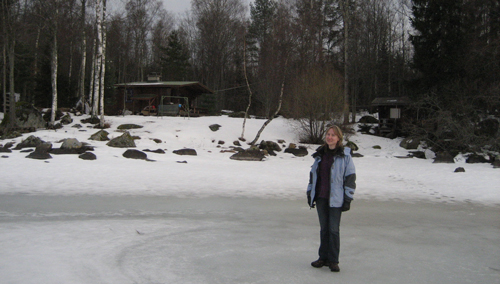
poland_snow

About 10 days ago, Olga and I began a road trip from St. Petersburg, Russia to visit Stoneworks ministry sites in eastern and central Europe.  Stoneworks continues to expand, and it’s an honor to be able to visit so many wonderful people that God has put together as ‘living stones’ (1 Peter 2:5).

Our first stop was in Minsk, Belarus where we visited with our ministry Spring of Revival.  We stayed with Yasha and Olga Goncharenko and had a great time visiting several ministry sites.

Olga and her staff continue to do great work under difficult circumstances.  They are very worthy of our help and support.

The highlight of our visit was at the Minsk Family Home. The young ladies who live there are doing very well, and Alesya (the counselor, in front on the right) is doing a great job.

We had a good meal together, shared stories and were blessed to have a good time of fellowship and mutual encouragement.

We also visited a foster family we support.  The home, for eleven children, is in a small village 30 minutes from Minsk.

We had a great meal there (this is a theme of our travels), and saw some of the pigs we bought for them. We’re now helping purchase a cow, and we’ve also purchased chickens and provided other aid for foster families.

From Minsk, we drove through eastern Poland to Budapest, Hungary after a long day.

The trip through that part of the world is quite interesting and the land is very beautiful, especially as we made our way through the Carpathian mountains of eastern Slovakia.

In Budapest, we continue to build a relationship with the Free Methodist World Mission.  I hope we will be able to place a long-term missionary to help the local church with outreach and youth ministries.

I had a good visit with the team there, and I am very hopeful that we can partner with them in the future.  This was my third visit to Budapest, and I’m feeling more and more ‘at home’ there.  And the Danube is always a treat:

budapest_feb_10-9

From Budapest, we made our way to Serbia.  We visited our good friends Jan (pronounced ‘Yahn’) and Nada Dudas in Bachki Petrovac, a small farming town in the region of Voivodina.  Jan is an elder in the Baptist church.

novi_sad-15I am hopeful that Stoneworks will be able to serve them in some way.  For now, we continue to build relationships as we discern how the Lord is leading us.  I was honored to offer the sermon at church, and I feel well-received.

We also visited the old town of Novi Sad (left), which is nearby.  I’m enjoying getting to know more about the rich history of the area.

Most of the people in Bachki Petrovac are of Slovakian heritage, and the church service was in Slovakian.  Everyone also speaks Serbian, of course, and many speak English; we also heard some German and French, and several people spoke Russian with us.  It’s quite a place.

From Serbia, we drove to our final destination – Podgorica, Montenegro.  The trip over the mountains was spectacular; we saw many dramatic waterfalls caused by the spring snow melt.

We’ll be here for three weeks, having fellowship with the church, helping any many ways and spending time with our family here (Olga’s sister just had a baby boy who is the pride of the family). I’ve been asked to take over the teaching duties at the church for the next three weeks, and I’m glad to help in that way.

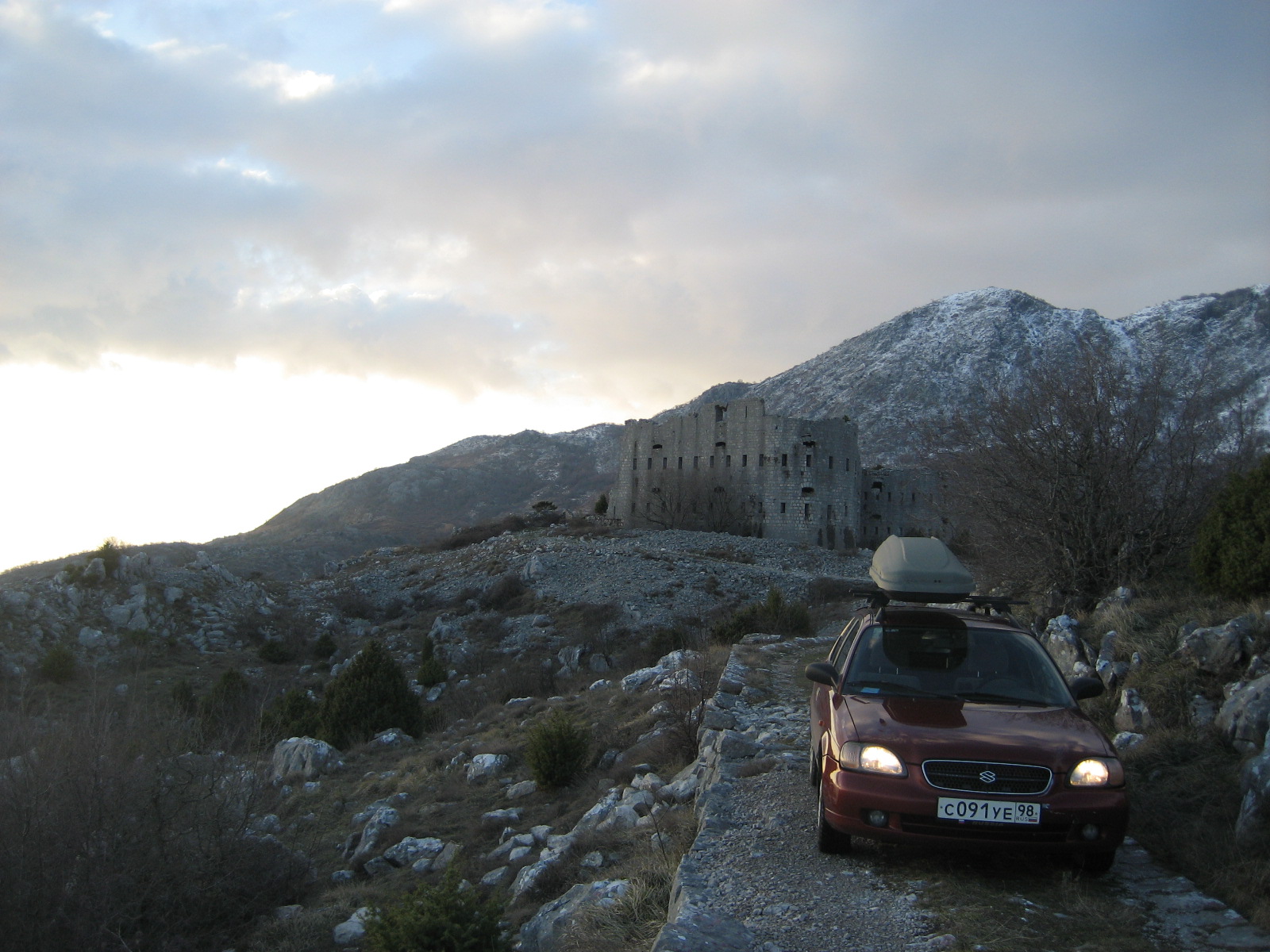
Yesterday, I traveled to Cetinje with Vladimir Cizmanski, pastor of the Brethren Assembly. We had good conversations as we wound our way through the Black Mountains. This is the view we saw as we returned home:

mne_mountains

The Lord has given us so much beauty. Of course, the places we’ve seen are beautiful, but even more beautiful are the people and the relationships He has established as we walk with Him.

A Tale of Two Dinners

home_groupweb

Olga and I have been very blessed by the great relationships God has given us here in Russia.  This was recently illustrated well.

We host a church home group at our apartment on Sunday evenings.  On Sunday afternoons, Olga teaches English to several people from our church.  In between is time for a meal and fellowship.  It’s great fun to have so much life in our house. The picture above is of the Sunday home group.

The next day, we hosted a pot-luck dinner for the workers at MIR.  Not everyone was able to attend, but we still had a good crowd. MIR continues to grow and do well.  Masha Oshkina (seated at right, below) is doing a great job as Executive Director.

MIR is now interviewing for the summer hosting program as well as preparing for other summer work.  We’ve added a new staff member, Tanya, seated second from left.

mir_group-1

You may notice that Oksana, the orphan who lived with us, was visiting.  She’s going through a tough time, and we’ve been very glad to have her around.

On Friday, Olga and I depart for a ministry road trip. We’ll first drive to Minsk, Belarus to visit Spring of Revival there. I’m especially looking forward to visiting the Minsk Family Home.  From there, we drive to Budapest, Hungary for a few days to visit with friends and explore opportunities for ministry.

Then, we go to Baska Petrovac, Serbia where we’ll visit friends and talk about partnership in ministry.

After this, we drive to Podgorica, Montenegro, where we get to see our newest family member, Andrej, and spend time with the church. Then we return with another stop in Budapest before leading up a Stoneworks retreat in Tallinn, Estonia.

It’s going to be a full few weeks, and we have gratitude for the great relationships we have in so many parts of the world.

Jesus promised that His followers would have abundant life, and we are thankful for it.

Another kind of anniversary

Another note from Stoneworks missionary Liz Hulley

This week, Russia celebrates 20 years of….McDonald’s!

I would like to leave the fast-food (health) debate for the moment and comment on the culture implications. This kind of anniversary is interesting when looked at in the light of what was going on the world at the time.

1990: I was almost 8 years old and probably didn’t know that the USSR existed. And I barely knew what McDonald’s was, as I wasn’t raised on fast-food.

Meanwhile, in Russia, an interesting “cultural” exchange was taking place. I enjoyed reading the accounts in Monday’s local paper (Metro) about people’s memories of the first McDonald’s opening in Moscow.

They speak of the lines, the intrigue, the scent of a new kind of food. People who had worked as servers describe the pressure they felt, then the relief as the idea took on.

I don’t know exactly which characteristics of American culture are represented by McDonald’s cuisine: Convenience? Mass-marketing? Consumerism? At any rate, in some ways this was a little crack in the cultural barrier. Something that could be “shared”?

An interesting excerpt from Metro (Feb.1, 2010).

How many hours do you have to work, to buy a Big Mac?

-in 1990: 2 hours, 10 minutes
-in 2010: 30 minutes

-in 1990: average salary was 297 rubles a month, a Big Mac cost 3 rubles, 75 kopecks

I asked a friend recently what her favorite restaurant was, and she said “McDonald’s.”

I suppose it is cheaper than other establishments in St. Petersburg, but it is still considered “eating out,” not something most people can afford to do regularly.

‘He is the most beautiful baby!!!’ — My sister’s words

As you can see, this is Olga writing here.

Well, I had to be patient and wait five days for the pictures!  But today they have finally arrived!  I called my sister and heard a great news, that she is already at home with her baby!

She did say that she thinks him to be the most beautiful baby!  And to that she holds!  It is so much fun to talk to her and to hear her speaking of those little delightful things of daily care!

baby2He is really so cute and sweet!!!!!

I am so tickled to just get into the car and go to her!  I envy those around her now who can be with her and enjoy these moments.

I should not complain though.  Mike and I are going to be the first out of our St. Pete crew who will see him and get to hold him and help Alla with her tasks.  She already promised to use me to the fullest! 🙂

It is a very new feeling to me, and when I first saw my mom after we got the news, the two of us just held each other close and could not stop smiling!

The Lord is so good.

I know I am not saying anything new, and (using the Russian phrase) ‘I have not discovered America’ by saying that babies are the wonder and the gift from the Lord.

But I think it is the first time in my life that I truly feel this.

And I am so happy!!!

Aunt and Uncle —

Good news! Olga’s sister Alla gave birth to a boy — Andrej.  The baby has some jaundice, but everyone is doing well. We’re very happy to be Aunt and Uncle. We’ll post pictures soon.

Alla is married to Zhelyan, a Montenegrin, and they live in Podgorica. And we will soon be in Montenegro.

(Click here for a quick guide to our Montenegrin connections.)

We’ll drive from St. Petersburg to visit the Stoneworks ministry in Minsk, then we’ll drive to visit friends in Hungary and Serbia, looking for ministry opportunities as well.

From there we’ll go to Montenegro to spend a few weeks with family and friends. We’ll follow basically this route, but now we have more personal connections along the way.

It will be great to be with our family in Montenegro, and we’ll be working on some ministry projects.

A Winter Walk

winterwalk-2Yesterday I had to run some errands down town, and decided to walk part of the way back home.  Just before the New Year we had a record snow fall since 1881, so much that the city almost came to a full stop for a few days.  Things are a little better now, but it is still hard to get around.  Nonetheless the scenery is a delight!

Our past winters have not spoiled us for beautiful views.  We occasionally had some cold spells and some snow, but this time we are really having a winter!!!!   For a few days now we had this beautiful snow covered trees, and the city looks like a winter wonderland!

It is truly a joy to walk through streets and parks and enjoy the clean snow, the lovely trees and buildings covered with frost!  I forgot how much I love waking in downtown St. Petersburg.

I walked by Moika river.  They cleared a little path on the embankment.  The access ways to the water were filled with snow, so I was not able to get down to the ice covered river.

Earlier that day I read from a devotional book about getting to some quiet place where you can see the majesty of the Lord.

winterwalk-62Well, I would not call the city a “quiet place”, but I sure did feel His majesty and power even in the midst of stone and granite and power lines and cars. He showed me that He was still in charge, and that He can do whatever He wishes to do.

Men can do great things, they are, after all, made after His image and likeness, but He alone will order the day!

So yesterday I had this wonderful and surprising gift from my Father, and I am so grateful for it!

May the Lord bless you and delight you with small and big wonders!

Russian Christmas

Here’s a good explanation about Russian Christmas and why it is celebrated on January 7 —

Russian Christmas

Thirteen days after Western Christmas, on January 7th, the Russian Orthodox Church celebrates its Christmas, in accordance with the old Julian calendar.  It’s a day of both solemn ritual and joyous celebration

After the 1917 Revolution, Christmas was banned throughout Russia, along with other religious celebrations.  It wasn’t until 75 years later, in 1992, that the holiday was openly observed.  Today, it’s once again celebrated in grand fashion, with the faithful participating in an all-night Mass in incense-filled Cathedrals amidst the company of the painted icons of Saints.

Christmas is one of the most joyous traditions for the celebration of Eve comes from the Russian tradition.  On the Eve of Christmas, it is traditional for all family members to gather to share a special meal.  The various foods and customs surrounding this meal differed in Holy Russia from village to village and from family to family, but certain aspects remained the same.

An old Russian tradition, whose roots are in the Orthodox faith, is the Christmas Eve fast and meal.  The fast, typically, lasts until after the evening worship service or until the first star appears.

The dinner that follows is very much a celebration, although, meat is not permitted.  Kutya (kutia), a type of porridge, is the primary dish.  It is very symbolic with its ingredients being various grains for hope and honey and poppy seed for happiness and peace.

Once the first star has appeared in the sky, the festivities begin.  Although all of the food served is strictly Lenten, it is served in an unusually festive and anticipatory manner and style.  The Russians call this meal: “The Holy Supper.” The family gathers around the table to honor the coming Christ Child.

A white table-cloth, symbolic of Christ’s swaddling clothes, covers the Table.  Hay is brought forth as a reminder of the poverty of the Cave where Jesus was born.  A tall white candle is place in the center of the Table, symbolic of Christ “the Light of the World.”  A large round loaf of Lenten bread, “pagach,” symbolic of Christ the Bread of Life, is placed next to the Candle.

The meal begins with the Lord’s Prayer, led by the father of the family.  A prayer of thanksgiving for all the blessings of the past year is said and then prayers for the good things in the coming year are offered.  The head of the family greets those present with the traditional Christmas greeting: “Christ is Born!” The family members respond: “Glorify Him!”

The Mother of the family blesses each person present with honey in the form of a cross on each forehead, saying: “In the Name of the Father and of the Son and of the Holy Spirit, may you have sweetness and many good things in life and in the new year.”  Following this, everyone partakes of the bread, dipping it first in honey and then in chopped garlic.

Honey is symbolic of the sweetness of life, and garlic of the bitterness.  The “Holy Supper” is then eaten (see below for details).  After dinner, no dishes are washed and the Christmas presents are opened.

Then the family goes to Church, coming home between 2 and 3 am. On the Feast of the Nativity, neighbors and family members visit each other, going from house to house , eating, drinking and singing Christmas Carols all the day long.

The “Holy Supper” Continue reading

Ghosts of Christmas Cards Past

I recently told some Russian friends about something I did before I moved to Russia, and they asked if I’d post it on the web:

Years ago, when I was an old bachelor, I had the idea that it would be funny to have a different family each Christmas on my Christmas card.  One year at a church cookout I decided to go ahead and do it.

A friend from church was my ‘wife’, and we had three children.  I can say that it was quite a surprise to people when they got my card that year.  Several people thought I’d gotten married and hadn’t told them. (If you look closely, you’ll see that I have half a mustache; that was my way of saying ‘this is a joke’.)

The second year, I had a different wife and different children, a LOT of different children:

When my cousin got married, her mother (my Aunt Rose) asked if she could be on my next card.  We took this picture immediately after the wedding; the bride and groom are our best man and maid of honor.

As you can see by the groom’s expression, he was a bit befuddled as to why we were taking this picture on his wedding day, using the official photographer.

My church was located in an old movie theater in a strip shopping center.  One day after church, as I was walking to my car in the parking lot with many people going to and from the nearby shops, one of the ladies at church yells across the parking lot to me, ‘I want to be your wife this year!’  I yell back, ‘you’ll have to ask your husband!’

Later I thought about how very strange that must have sounded.

The next year, I was on hard times —

But by the last year, I had a trophy wife and a nice house!

And that was really my dog, Hank.

The story behind the last picture is fun.  I had scouted out this house to use for the card; it was on a large piece of property and quite imposing.  The day of the picture, we showed up and knocked on the door.  It took a little while for the owner of the house to understand exactly what we were asking, but once he got it he was pretty entertained and gave his permission.

I was soon to be married, and so the tradition ended.  Now I’m very happy to have the same wife each Christmas.