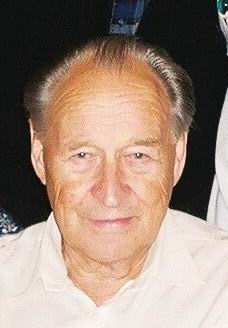
Orest Maximilianovich Groten

We went to dacha a few days ago.  Olga’s grandfather Orest is not feeling well, and we brought him to the city to go into the hospital.  He’s 90 years old and though his health is failing, his mind is still sharp.

I took this video of a classic dacha moment.  Orest is building a fire while Olga and her grandmother Ludmilla are in the living room talking.  It’s cold and snowy outside and warm with family inside.

Orest jokingly says, ‘this is the best technology’, and later,  ‘I think, if you show this in America they will just fall over’.  I like his sense of humor.

Orest has a very un-Russian name.  His first name is from the Greek Orestes (meaning mountain-dweller);  Groten is a Dutch/German surname.

His grandfather Nestor Maximilianovich Groten was a wealthy Russian landowner who was a railroad engineer and manager in Canada at the time of the Russian Revolution and did not return to Russia because of the danger to wealthy people like himself.

Orest’s father, Maximilian, was an ardent Communist who remained in Russia.  When Orest was a child, he and his mother were in White territory during the Russian civil war (between the Reds and the Whites), and they were in danger because his father was a Red.

Orest fought in the Red Army in the Great Patriotic War (WWII) as a radio operator near the black sea.  He later joined the Communist Party and was a naval engineer.

Orest lived through the Soviet period.  Born in 1918, he saw the lifespan of Stalinism, lived through the times of Kruschev and Brezhnev; he witnessed the collapse of the USSR, the chaos of the 90s and the rise of Putin.  And he saw the day when an American (!) would marry his granddaughter.

Just after I married Olga, Orest said to me,  ‘fifteen years ago, if they [Communist leaders] knew I was talking to you, they would have shot me’.  He witnessed dramatic changes in the culture.

Orest had to hide his family heritage because his name was not ‘truly Russian’ (and therefore suspect) and the Communists would persecute those with wealthy ancestors.  This meant that Olga never heard family stories of her grandparents and great-grandparents.

Only recently have we begun to learn about those earlier generations.  This is one legacy of the soviet doctrine — many Russian families now have broken links to past generations and much personal history has been lost.  Orest’s life embodies much of the Russian experience over the past century.

A Few Dacha Videos

Can you tell that I’m learning how to post videos?  Here are four short videos from our visits to Olga’s grandparents’ house.

The Russian summer or country house is called the dacha (rhymes with gotcha).  In usage we say things like, ‘I am going to dacha’ or, ‘how was dacha?’.

These videos are pretty poor quality and quite short.  I promise I’ll do better in the future.  But they will give you a flavor of life at dacha.

Continue reading

Катюша (Katyusha)

Here is a favorite Russian tune, in a great setting —

Katyusha is a tender diminutive from the female name Ekaterina (Catherine):  Katya is the nickname and Katyusha, a tender diminutive.

This is a Russian Soviet wartime song about a girl longing for her beloved, who is away on military service. The music was composed in 1938 by Matvei Blanter and the lyrics were written by Mikhail Isakovsky. It was first performed by the celebrated Russian folk singer, Lidiya Ruslanova.

Proposal

Today, as I was gathering photos for the site, I ran across this picture.

I proposed to Olga in the garden at dacha.  It was her grandmother’s birthday, August 28, and we were there to celebrate with her.

Earlier that morning Olga and I both felt God’s clear call for us to be married (that story will be told in a future post), so I knew that I’d ask her to marry me that day.

Before I proposed to Olga, I asked Olga’s mother to bless our marriage.  She had to sit down when she realized what I was about to do!  After she gave her blessing, I gave her a camera and asked her to take a picture when I proposed.  She was crying and it was hard for her to focus on us as she stood on the porch overlooking the garden.

It was a film camera and by the time we developed the film we’d forgotten that she took the picture.  It turned out pretty well:

By the way, this was the first time I told Olga that I love her.  We were both guarding our hearts and remembered counsel from an Elisabeth Elliot book: only say I Love You when the next sentance is Will You Marry Me.  It’s good advice.

A Quick Guide to Russian Family and Friends

At the risk of offending some people by leaving them off, I’ll make a stab at giving a Russian ‘cast of characters’ to help minimize confusion —

Mike Cantrell: uhmmmm, me

Olga Cantrell: my wife, we married in 2001. She is the BEST!

Tanya Yaskevich: Olga’s mother

Alla Pavetic: Olga’s twin sister who now lives in Montenegro (see this post for the Montenegrin guide)

Orest and Ludmilla Groten (Grootten): Olga’s grandparents, Tanya’s parents, in the summers they live at ‘dacha’, an old log home in a village south of St. Petersburg. Continue reading

Purity

I have been thinking about purity of heart and a few scriptures have come to my mind.

Matthew 5:8 — “Blessed are the pure in heart, for they shall see God.”

Psalm 24:3,4 — “Who may ascend the hill of the Lord?  Who may stand in His holy place?  He who has clean hands and a pure heart, who does not lift up his soul to an idol or swear by what is false.”

Psalm 51:10 — “Create in me a pure heart, O God, and renew a right spirit within me.”

I believe that purity is related to holiness.  Hebrews 12:14 says  “. . . without holiness no one will see the Lord.”

Someone who is pure in heart is a person whose thoughts and motives are blameless,  someone who does not just do right things but who is also far from anything that defiles.

I also think of a pure diamond: when it is clean and pure, it can reflect light and cast around all kinds of color.  When we are pure, then the light of God, when it shines on us, will be reflected in us and shine forth and all will see it and glorify the Lord.