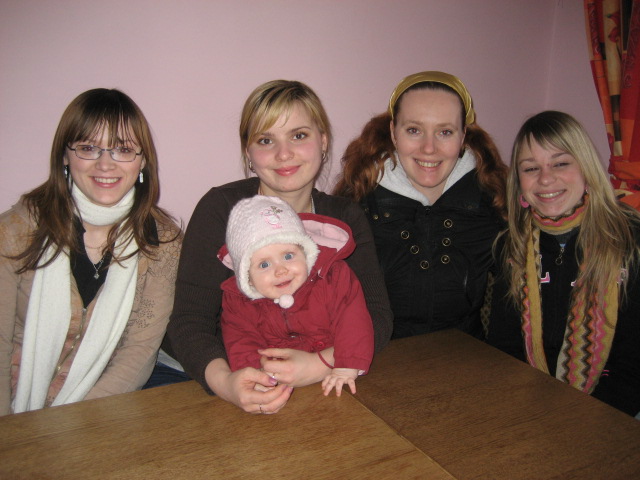
Stoneworks partners with a Christian charity, Spring of Revival (SOR), serving orphans in Belarus. Olga and I were very glad to make our first trip to visit them recently. Spring of Revival is directed by Olga Goncharenko, who I first met when she worked as an interpreter with American teams in Russian summer camps several years ago. Continue reading
Word study
Here’s another good post from Liz Hulley —
In a recent series on dealing with habitual sin, our pastor mentioned that “to confess,” in the original, means “to say the same thing.”
Today I was trying to translate a passage from John 1 (with the help of a dictionary), and I ran into a Greek word I did not know. The first part was “homo” (same). The second part contained “logos” (word). Same word? I could not think of a verb that would correspond in meaning. Continue reading
Careful!
This is some cctv footage of an intersection we have driven through many times. You can see why it’s important to drive defensively in Russia.
These accidents are caused by people running or jumping a red light; both problems are common here. There are traffic lights at that intersection, but the size of the intersection means there are more collisions.
Contrasts
Here are two contrasting videos.
The first is what I see a lot of when I’m in the city.
The second is what I wish I saw more of at dacha.
A Postcard from Russia — Family News
Please keep this in prayer — on the way to church yesterday Olga’s mother, Tanya, was hit by a car. She has lost some teeth and has a concussion. The neurologist said that she’s OK, but some of her upper jaw has been damaged so that it will be difficult to implant teeth in the future.
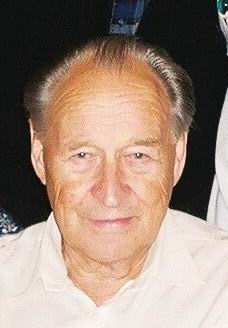
Olga’s grandfather was released from the hospital yesterday. Orest is 90 years old and doing very well considering his age. We took him and his wife Ludmilla to dacha today. He is very happy to be back home in the country. He’s pictured above at dacha, and a picture of dacha is to the left.
Ludmilla has a mass in/on her intestines (we’re not sure what it is) and will be getting out-patient treatment until she goes into the hospital in a couple of weeks for more tests. She’s not feeling very well herself and is under some pressure as she cares for Orest. Being at dacha should help them relax a bit.
I will go to Estonia on Monday (and perhaps Olga will be able to travel with me) to learn more about ministry opportunities there and have some time with missionaries to see how we might serve them. The Lord may be opening a door for us to minister in Estonia. On Wednesday I’ll drive to Belarus to visit Spring of Revival, and help them as I am able.
Kostya Protasov
Our church in St. Petersburg started (and continues) as a ministry to drug addicts and prostitutes. In addition to street evangelism, city-wide worship services and other ministries, StreetCry has a two year School of Ministry. Kostya is 26, currently in the second year of the program and is one of the leading evangelists in our church.
Here is his story:
My name is Kostya and I was typical of my generation. Drug user, consumer, egoist – “mine, me, myself and I” were the words describing my life credo.
Since I turned 13, my motto was “Take from life everything that it has to offer!” Together with my friends I partied, went to discos, drank, smoked, used hash, etc… every day purposed to discover and experience something new.
I fell in love with the most beautiful girl in our class and – like in a fairy tale – she became mine. We modeled our lives according to the latest Hollywood movies, only we were the main characters.
In the summer of 1997, I went to visit my friend in Voronezh region (south of Russia). All summer we used hash and poppy that grew everywhere – we smoked, boiled and whatever. . . Continue reading
St. Petersburg Metro
Here is a view of the Metro System in St. Petersburg —
Too Late
Here is a good article by Liz Hulley, a friend and long-term missionary to Russia who is currently in the US. It’s from her blog, On Life in St. Petersburg:
I was searching for something non-trashy to watch on television and paused on PBS. A drama was on and I could see rolling hills and 19th century costumes. I hoped it was something uplifting like Jane Austen, and not Tess of the D’Urbervilles which seemed to be on each time I chose this station.
The tv guide described the movie playing as something like, “A girl struggles to improve her life after sorrowful circumstances.” That sounded hopeful.
As the film continued, however, I knew it had to be Tess of the D’Urbervilles. Yet I hadn’t read it since college, and hoped that the ending was happier than I remembered. Perhaps I just wasn’t remembering correctly. Continue reading
Again — No Comment
Orest Maximilianovich Groten
We went to dacha a few days ago. Olga’s grandfather Orest is not feeling well, and we brought him to the city to go into the hospital. He’s 90 years old and though his health is failing, his mind is still sharp.
I took this video of a classic dacha moment. Orest is building a fire while Olga and her grandmother Ludmilla are in the living room talking. It’s cold and snowy outside and warm with family inside.
Orest jokingly says, ‘this is the best technology’, and later, ‘I think, if you show this in America they will just fall over’. I like his sense of humor.
Orest has a very un-Russian name. His first name is from the Greek Orestes (meaning mountain-dweller); Groten is a Dutch/German surname.
His grandfather Nestor Maximilianovich Groten was a wealthy Russian landowner who was a railroad engineer and manager in Canada at the time of the Russian Revolution and did not return to Russia because of the danger to wealthy people like himself.
Orest’s father, Maximilian, was an ardent Communist who remained in Russia. When Orest was a child, he and his mother were in White territory during the Russian civil war (between the Reds and the Whites), and they were in danger because his father was a Red.
Orest fought in the Red Army in the Great Patriotic War (WWII) as a radio operator near the black sea. He later joined the Communist Party and was a naval engineer.
Orest lived through the Soviet period. Born in 1918, he saw the lifespan of Stalinism, lived through the times of Kruschev and Brezhnev; he witnessed the collapse of the USSR, the chaos of the 90s and the rise of Putin. And he saw the day when an American (!) would marry his granddaughter.
Just after I married Olga, Orest said to me, ‘fifteen years ago, if they [Communist leaders] knew I was talking to you, they would have shot me’. He witnessed dramatic changes in the culture.
Orest had to hide his family heritage because his name was not ‘truly Russian’ (and therefore suspect) and the Communists would persecute those with wealthy ancestors. This meant that Olga never heard family stories of her grandparents and great-grandparents.
Only recently have we begun to learn about those earlier generations. This is one legacy of the soviet doctrine — many Russian families now have broken links to past generations and much personal history has been lost. Orest’s life embodies much of the Russian experience over the past century.